

In this video, Wes Watson shares how a surfing, skating, snowboarding kid growing up in the beach City of Oceanside, California, can wind up doing 10 years in the California prison system

In this video, Wes Watson shares how a surfing, skating, snowboarding kid growing up in the beach City of Oceanside, California, can wind up doing 10 years in the California prison system

COVID-19 has put over 30 million small businesses in America on the brink of collapse. The CARES Act, the largest stimulus package in history, has allocated over $350B to assist small businesses so that they can survive and that one day their employees, millions of whom have been laid off, can return to work.
To make sure you are getting the right advice, IMPACT has partnered with former Small Business Administration officials and experts to host a webinar that will address your most pressing questions
These are tough conditions. Accessing stimulus benefits, learning how to extend your runway, taking care of your employees, and preparing for them to return to work are complex tasks. The CARES Act includes protections for payroll, loan forgiveness, loans, deferment of Social Security tax obligations, and tax credits for wages paid for small businesses.
Below are some high-level references and useful resources to get you started.
There are a number of grant and loan options including emergency grants, EIDL Loans, and PPP loans. Though you can get both a PPP loan and an EIDL loan, you may not use both for the same purpose.
The CARES Act also includes opportunities to take advantage of tax credits and debt forgiveness.
SBA Guide: https://www.sba.gov/funding-programs/loans/coronavirus-relief-options
Treasury Guide: https://home.treasury.gov/policy-issues/top-priorities/cares-act/assistance-for-small-businesses
Congress: https://www.congress.gov/bill/116th-congress/house-bill/748/text?loclr=bloglaw
OSHA: https://www.osha.gov/Publications/influenza_pandemic.html
Additional Resources:
Berkeley Law: https://www.law.berkeley.edu/research/business/cares-act-and-small-businesses/
National Law Review: https://www.natlawreview.com/article/congress-passes-cares-act-overview-relief-available-to-small-and-other-business
H&R Block: https://www.hrblock.com/tax-center/irs/tax-law-and-policy/cares-act-small-business/
COVID Biz Relief https://covid19bizrelief.com/

Joel Klein speaks about what it takes to do a transformation in our education system and what makes true leaders.
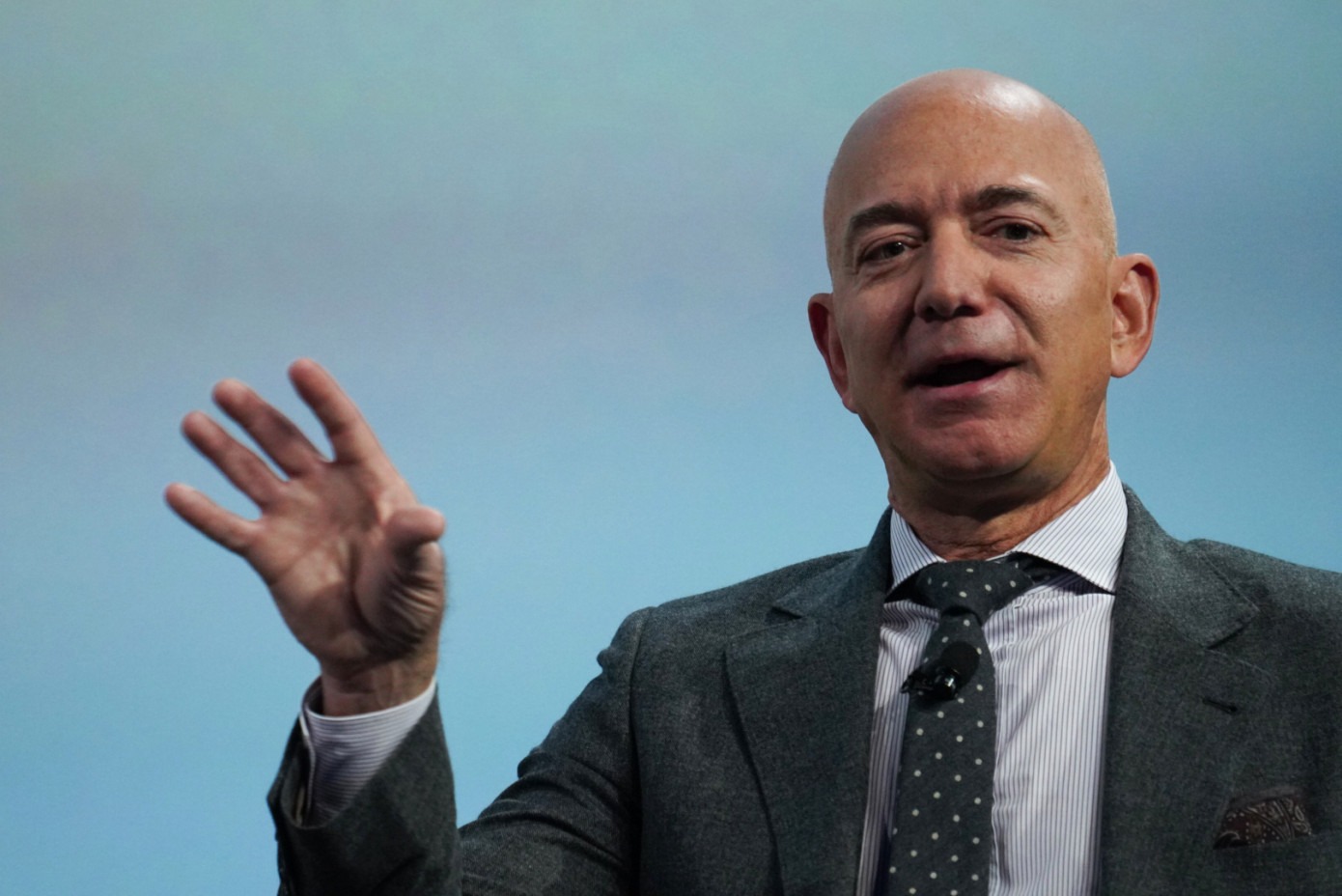
Jeff Bezos (one of the world’s richest men) announced on one of the world’s largest social media platforms (Instagram) that he’s creating a $10 billion fund to combat climate change.
In a post on Monday morning Bezos announced that the Bezos Earth Fund will finance “scientists, activists, NGOs — any effort that offers a real possibility to help preserve and protect the natural world.”
Bezos is already an investor in Breakthrough Energy Ventures, a fund whose mission is to finance the development of technologies that can mitigate climate change and reduce the use of fossil fuels and carbon emissions in industries, including energy generation, food production and manufacturing.
Questions about the new fund are being referred to Amazon, which doesn’t have much to share. The money is from Bezos’ personal wealth and is separate from the foundation that he’d established, according to a spokesperson for the company.

Tune in to a livestream on Thursday, January 16, at 9:00 AM PT to learn more about Microsoft’s plan to reduce our carbon footprint.

For decades, planners have been called evil or obsolete. A housing crisis might offer a chance at redemption. In 2018, Scott Wiener, a California state senator representing San Francisco, introduced a co-authored bill that detonated a debate over housing. The aim of Senate Bill 827 was to override local regulations on building height in order to allow denser, high-rise construction near transit hubs. At once radical and simple, its target was nothing more, and nothing less, than zoning—the most common American way to control land use. Zoning determines whether a building is commercial or residential, how big it can get, whether it’s a single-family home or a high-rise tower. Though zoning is a legislative act, it is sometimes influenced by the efforts of a handful of well-connected people at a neighborhood association, or sometimes by a single, well-connected member of a zoning board. S.B. 827 would have overridden many such rules and made it easier to build.

California, the land of golden dreams, has become America’s worst housing nightmare.
Recent wildfires have only heightened the stakes for a state that can’t seem to build enough new homes.
The median price for a house now tops $600,000, more than twice the national level. The state has four of the country’s five most expensive residential markets—Silicon Valley, San Francisco, Orange County and San Diego. (Los Angeles is seventh.) The poverty rate, when adjusted for the cost of living, is the worst in the nation. California accounts for 12% of the U.S. population, but a quarter of its homeless population.

Apple announced this morning a significant $2.5 billion commitment toward easing the California housing availability and affordability crisis. The investment includes a $1 billion commitment to an affordable housing investment fund, $1 billion toward a first-time homebuyer mortgage assistance fund and $300 million in Apple-owned land, which will be made available for affordable housing.
Another $200 million will go to support new, lower-income housing in the Bay Area, including by way of a $150 million Bay Area housing fund, with partners like Housing Trust Silicon Valley. This will consist of long-term forgivable loans and grants. Another $50 million will be directed toward vulnerable populations, specifically to address homelessness in the Silicon Valley area.
Apple says it also will look into similar efforts across both Northern and Southern California that are designed to prevent homelessness.

The social-media giant estimates its initiative will produce up to 20,000 new housing units over the next decade. Facebook Inc. said it is providing $1 billion to help ease a shortage of affordable housing in Silicon Valley, the third tech giant this year to commit to addressing the issue as the industry seeks to soften the impact of its rapid growth.
The social network company estimates its initiative will produce up to 20,000 new housing units over the next decade, much of it aimed at teachers, police and other middle-class workers near its headquarters in Menlo Park, Calif.

This past Tuesday (Sept 17, 2019), I attended a panel discussion on affordable housing in San Francisco. Afterwards, I wrote and edited a quick summary of my main takeaways from the panel and shared it on Instagram. Several friends commented that it was helpful to them, so I’m sharing it here on Medium in a more permanent location.
The panel was hosted by Impact SF, a new chapter of an NYC organization which describes itself as “a non-profit and non-partisan organization dedicated to understanding today’s most pressing social and political issues and promoting viable actions for positive change”. It was also co-hosted by Yimby Action, a CA organization focused on lobbying to bring down the cost of housing.