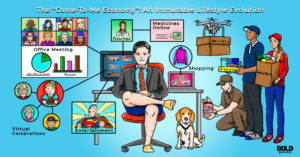
The “Come-To-Me Economy”: An Immutable Lifestyle Evolution


I haven’t had a cold in months. I haven’t had to commute to the office, nor travel for business. If I want, my groceries can be delivered with just a click. The same holds true for any medicines I may need, or books, or home goods… really, almost anything can now be delivered to my front door. Yes, this lockdown was rough–for me and for everyone–but it has shown that there isn’t much I actually have to go to. Instead, everything can come to me.

Thanks to COVID-19 and a world thrust into chaos, we live in a changed world. As I wrote in my upcoming book, “Project Bold Life: The Proven Formula for Taking On Challenges and Achieving Happiness and Success”, suffering and setbacks are part of the human equation, and the pandemic has certainly given us plenty of both! We now know that the threat of pandemic is real, and the costs when one hits are significant. The World Health Organization announced that COVID-19 will require a new way of living until a vaccine is available, and as a result, businesses had to switch from an office-based existence to a remote workforce. All travel related to work was reduced to nil, while the notion of attending a conference or client dinner was (and remains) simply out of the question until science comes up with a vaccine or cure. COVID-19 has changed everything!

The Stimulus Package Uncovered Webinar Transcript

Our panelists include Maria Contreras Sweet, the former Administrator of the Small Business Administration, the 24th, appointed by President Barack Obama and served from 2014 to 2017. Ann Marie Mehlum the former director and founding President and Chief Executive Officer of Summit Bank. And she also served as the Associate Administrator of Capital Access at the US Small Business Administration, where she’s oversaw SBA programs that provide access to capital for American small businesses and a portfolio that exceeded $100 billion. Tom Sullivan the Vice President of the Small Business Policy at the US Chamber of Commerce, and he served under President George W. Bush as the Chief Counsel for Advocacy at the US Small Business Administration.

CARES Act Stimulus Package for Small Businesses

COVID-19 has put over 30 million small businesses in America on the brink of collapse. The CARES Act, the largest stimulus package in history, has allocated over $350B to assist small businesses so that they can survive and that one day their employees, millions of whom have been laid off, can return to work.

To make sure you are getting the right advice, IMPACT has partnered with former Small Business Administration officials and experts to host a webinar that will address your most pressing questions

CARES Act Key Takeaways

These are tough conditions. Accessing stimulus benefits, learning how to extend your runway, taking care of your employees, and preparing for them to return to work are complex tasks. The CARES Act includes protections for payroll, loan forgiveness, loans, deferment of Social Security tax obligations, and tax credits for wages paid for small businesses.

Below are some high-level references and useful resources to get you started.

Loans and Grants:

There are a number of grant and loan options including emergency grants, EIDL Loans, and PPP loans. Though you can get both a PPP loan and an EIDL loan, you may not use both for the same purpose.

  • Emergency grants for small businesses to cover operating costs within three days of applying for an SBA Economic Injury Disaster Loan (EIDL). This grant does not need to be repaid.
    • To access: apply for an EIDL and then request the advance.
    • Use of money: may be used to keep employees on payroll, to pay for sick leave, meet increased production costs due to supply chain disruptions, or pay business obligations, including debts, rent and mortgage payments.
  • EIDL Loans, granted through the SBA
    • Available to pay for expenses, such as payroll and operating expenses, that would have been paid by business operations had the disaster not occurred.
  • PPP Loans granted through banks
    • Any part of the loan allocated to keep payroll (for workers up to $100,000), keep workers on the books, pay healthcare, pay rent/mortgage interest, or utilities can be forgiven provided workers stay employed through the end of June.

Debt Forgiveness and Tax Credits:

The CARES Act also includes opportunities to take advantage of tax credits and debt forgiveness.

  • Employee Retention Credit
    • Refundable tax credit of 50% on qualifying wages (up to $10,000)
  • Payroll Tax Postponement
    • Postpone paying your share of Social Security for employees, with half due by December 31, 2021 and the remainder due by December 31, 2022.
  • Forgiveness for Paycheck Protection
    • Forgiveness sliding scale is based on employee count, total pay, and use of loan. See official resources for further guidance

Official Resources:

Senate Guide: https://www.sbc.senate.gov/public/_cache/files/9/7/97ac840c-28b7-4e49-b872-d30a995d8dae/F2CF1DD78E6D6C8C8C3BF58C6D1DDB2B.small-business-owner-s-guide-to-the-cares-act-final-.pdf

SBA Guide: https://www.sba.gov/funding-programs/loans/coronavirus-relief-options

Treasury Guide: https://home.treasury.gov/policy-issues/top-priorities/cares-act/assistance-for-small-businesses

Congress: https://www.congress.gov/bill/116th-congress/house-bill/748/text?loclr=bloglaw

OSHA: https://www.osha.gov/Publications/influenza_pandemic.html

Additional Resources:

Berkeley Law: https://www.law.berkeley.edu/research/business/cares-act-and-small-businesses/

National Law Review: https://www.natlawreview.com/article/congress-passes-cares-act-overview-relief-available-to-small-and-other-business

H&R Block: https://www.hrblock.com/tax-center/irs/tax-law-and-policy/cares-act-small-business/
COVID Biz Relief https://covid19bizrelief.com/
The Emergence Of China As The Global Leader?

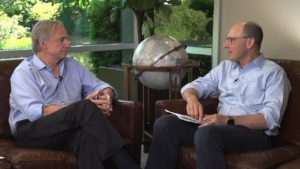
Over the last 40 years, China’s rapid economic expansion has altered the world’s geopolitical and economic landscape. Bridgewater’s Founder, Co-CIO and co-Chairman Ray Dalio joins Bridgewater’s Senior Portfolio Strategist Jim Haskel to discuss the historical arc of this growth and why the portfolio characteristics of China’s markets are attractive and diversifying despite escalating global tensions.

A Template For Understanding Big Debt Crisis

A great example of the value of long running study and questioning to build fundamental understanding of an important issue. Learn how Ray Dalio has improved our collective knowledge of how debt and economies work.

SV Academy Just Landed $9.5 Million to Offer Tuition-free Training That Puts People in Tech Jobs

When you live in Silicon Valley, it feels like nearly everyone works in tech and that entry into the industry is wide open. Of course, the reality is very different. Even as software eats the world, not everyone has the training or connections to land a high-paying job in either the traditional tech industry or with a company that’s actively embracing its digital future.

IMPACT Expert and Presidential Candidate 2020 Proposes a Freedom Dividend

Andrew yang, the New York entrepreneur running for the Democratic presidential nomination, cannot be accused of lacking confidence. “I only see two outcomes in this race. One, I win. Or, two, someone else wins and takes the vast majority of my ideas into the White House,” he says from his campaign headquarters in midtown Manhattan. By branding himself a doomsayer of the impending automation apocalypse, which he warns will destroy most jobs and roil society, Mr Yang has cultivated a devoted following—leapfrogging better-known candidates like Bill de Blasio, the city’s mayor, and Kirsten Gillibrand, one of New York’s senators.

The A.I. Paradox: How Robots Will Make Work More Human

We live in a world where technological innovation is a constant. The recent pace of technological advancement is unprecedented. For instance, by 2030, it is expected that there will be 500 billion devices and objects connected to the Internet. The impact of automation, artificial intelligence, and the Internet of Things (IoT) is being felt almost everywhere, in all industries, jobs and everyday life. Given this pace of change, it is important to understand and anticipate what this means for future jobs, youth, and society more broadly, so that everyone has an opportunity to participate in the digital economy.

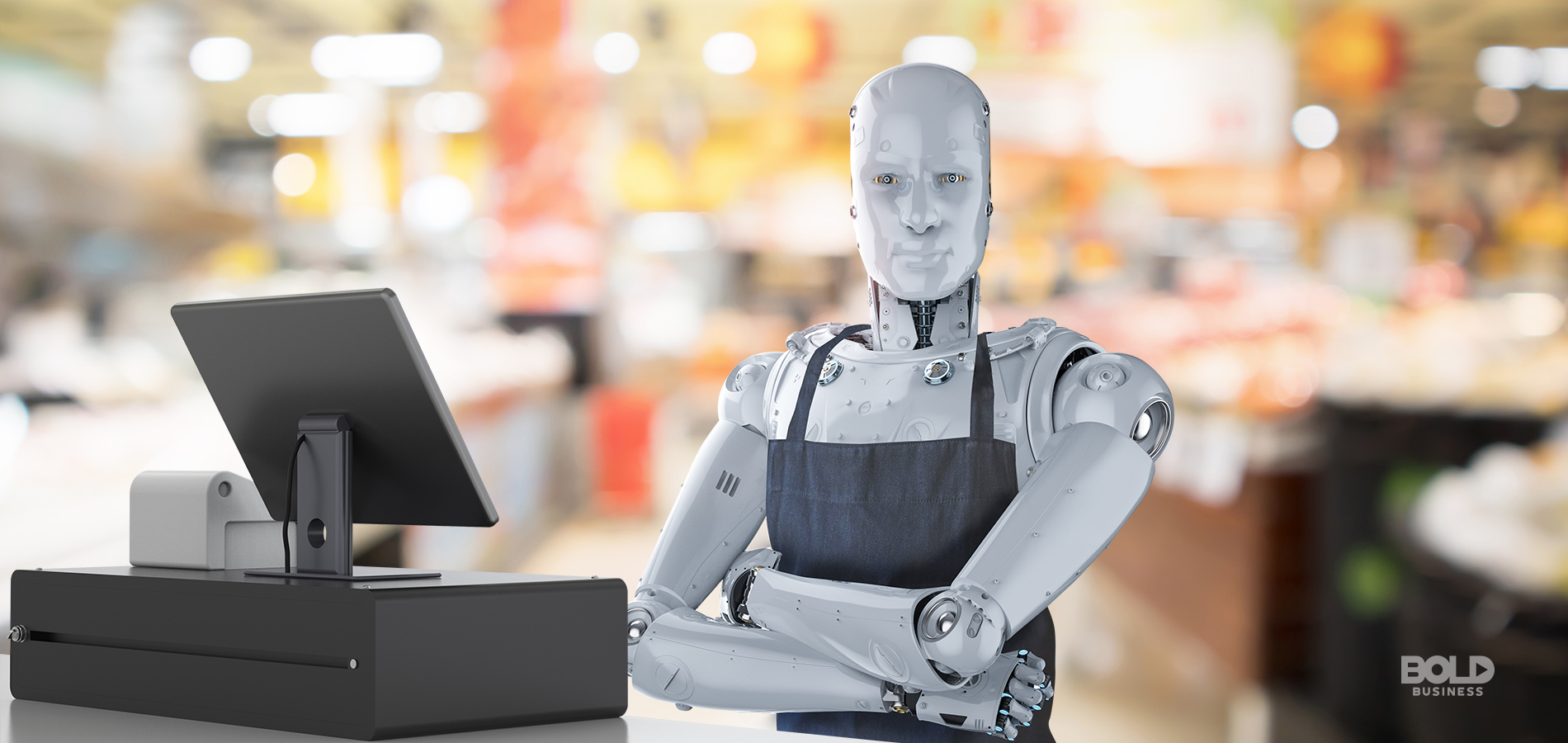
Customer Service And Circuits: Walmart, McDonalds And The Emerging Robotic Labor Force

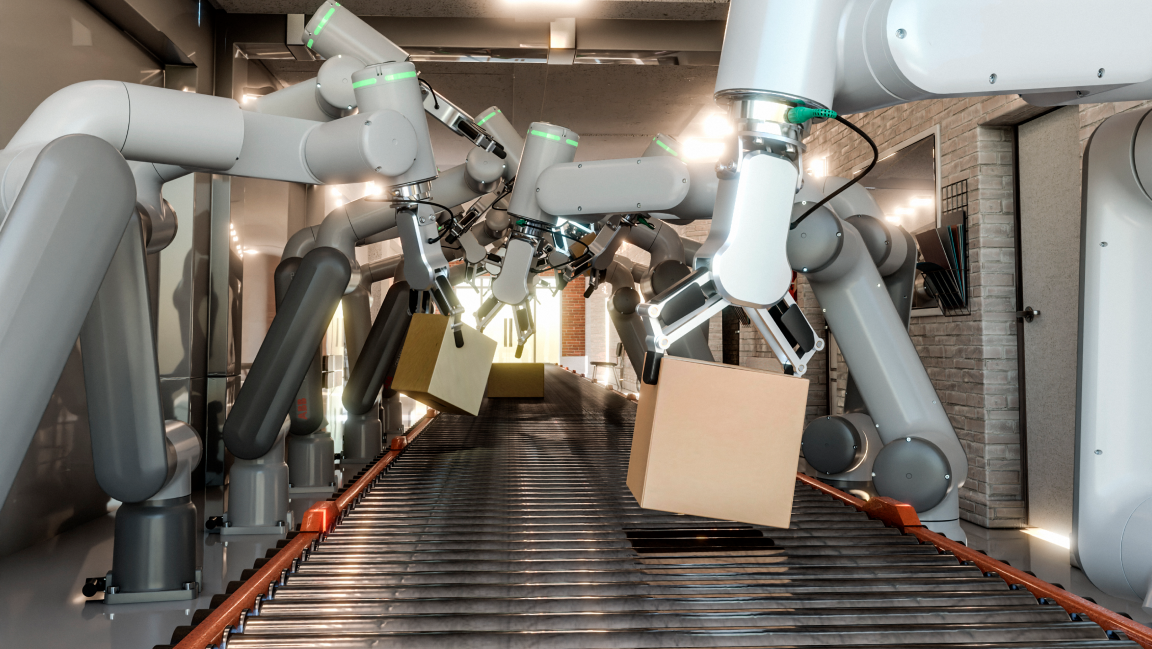
Robots used to be something present in science fiction movies and fantasy novels. But not anymore. A robotic workforce has already replaced more than 80 percent of the manufacturing sector. And other sectors are following suit. Some of the largest companies in the retail and food industries are ramping up their robotic automation tremendously. So what will this mean for consumers, as well as employees, in the future?


Watch on YouTube

Robotic automation offers many advantages, but it also introduces change. While there are several benefits to a robotic workforce, there is also the costs to appreciate. While convenience, efficiency and even safety may be enhanced, that doesn’t mean new challenges will not be encountered. Customers and workers alike need to prepare for these challenges as it appears that a robotic workforce is inevitable

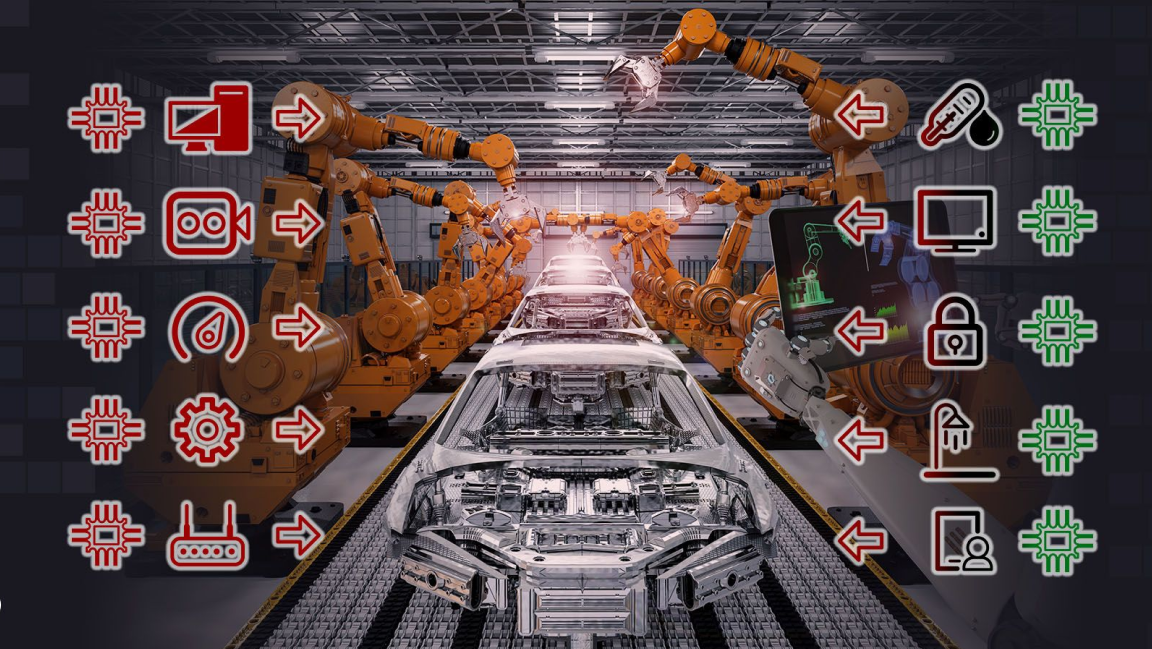
How Technology Is Transforming Manufacturing

New technology in manufacturing process is profoundly changing industrial production, giving rise to “the factory of the future.” Augmented reality, 3D Printing, Robotics, Wearables and the widespread applications of Blockchain technology are digitally transforming factories and manufacturing plants. It has ushered a new era of growth, with the industry projected to expand 7x faster than its best record in the 1990s.